
"Bill McAlpine"
1300 article(s) found

A brief introduction to the cultivation of Costa Rican boutique coffee beans with unique fragrance, geographical location, climate and altitude
Costa Rican coffee has full particles, ideal acidity and unique strong flavor. Costa Rica's coffee industry, originally controlled by the Costa Rican Coffee Industry Company (InstitutodelCafdeCostaRica, ICAFE), has been taken over by the official Coffee Committee (OficinadelCaf). In exported coffee, those products that are considered to be of substandard quality are used in blue.

A brief introduction to the market price of light and pure Costa Rican boutique coffee beans
Coffee is an important economic source of Costa Rica. It was introduced in 1808 and has been cultivated for 200 years. Costa Rica has 1x3 population invested in coffee-related industries. Colombians say that coffee has changed the country and enjoyed a rich environment, and coffee has indeed made an outstanding contribution. Although Costa Rica ranks third from the bottom in terms of land area in Central America, its economic environment is better than that of Central America.

The slow way of African Coffee entering China
Coffee originated in Africa and little is known about it. In fact, Africa Ethiopia is the hometown of coffee, producing the best Arabian coffee in the world. Soil, climatic conditions and an altitude of more than 2000 meters above sea level have enabled many African countries to create an ideal environment for the growth of coffee. At present, coffee production in Africa accounts for about 13% of the world's total output, and coffee income is accounted for by some African countries.

A brief introduction to the planting market price of Costa Rican boutique coffee beans with unique flavor
Coffee consumed in China (dyed blue or not dyed) accounts for about 10% of the total output. Local per capita coffee consumption is twice that of Italy or the United States. Other kinds of Brazilian coffee, such as Rio and Parana, can be produced in large quantities because they do not require too much care. Although the taste is rough, it is a kind of good and cheap coffee, because it is distributed all over the country and has solid quality.

A brief introduction to the description of the flavor, taste and aroma characteristics of Costa Rican boutique coffee beans
In 2002 and 2003, Colombia produced 3 million packets of coffee (60 kg each) and exported 1.87 million packets of coffee. 40% of the exported coffee is high-quality refined coffee, which is known internationally as GOURMET coffee. In the international market, refined coffee costs an average of US $93.61 per bag (46kg) (FOB), which is US $19.56 higher than that of ordinary coffee. I also have a kind of refined coffee, each bag.

A brief introduction to the market price of high-quality Costa Rican coffee beans with strong acidity
Coffee consumed in China (dyed blue or not dyed) accounts for about 10% of the total output. Local per capita coffee consumption is twice that of Italy or the United States. Other kinds of Brazilian coffee, such as Rio and Parana, can be produced in large quantities because they do not require too much care. Although the taste is rough, it is a kind of good and cheap coffee, because it is distributed all over the country and has solid quality.
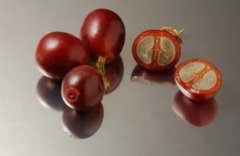
A brief introduction to the flavor and aroma characteristics of Costa Rican boutique coffee beans with fruit flavor
High-quality Costa Rican coffee is called extra hard beans, and this kind of coffee can grow at an altitude of more than 1500 meters. Altitude has always been a problem for coffee growers. The higher the altitude, the better the coffee beans, not only because the higher altitude can increase the acidity of the coffee beans and thus increase the flavor, but also because the night temperature at the higher altitude is lower, which can make the trees grow slowly.

A brief introduction to the flavor, taste and aroma characteristics of highly acidic Costa Rican boutique coffee beans
Coffee consumed in China (dyed blue or not dyed) accounts for about 10% of the total output. Local per capita coffee consumption is twice that of Italy or the United States. Other kinds of Brazilian coffee, such as Rio and Parana, can be produced in large quantities because they do not require too much care. Although the taste is rough, it is a kind of good and cheap coffee, because it is distributed all over the country and has solid quality.

A Brief Introduction to the Treatment Method of Grinding Degree and Roasting Degree of Costa Rican Fine Coffee Beans with Strong Acid
Coffee has changed the country, Costa Ricans say, and coffee has made an outstanding contribution to its rich environment.Although Costa Rica ranks third from the bottom in terms of land area in Central America, its economic environment is better than half of that of other countries.Because of its rich people and stable society, Costa Rica has more than 30 national parks. 1729

A brief introduction to the cultivation of fruit-scented Costa Rican boutique coffee beans, geographical location, climate and altitude
Coffee was introduced into Costa Rica from Cuba in 1729. Today, its coffee industry is one of the well-organized industries in the world, with a yield of 1700 kg per hectare. Costa Rica has only 3.5 million people but 400m coffee trees, and coffee exports account for 25 per cent of the country's total exports. The volcanic soil of Costa Rica is very fertile and well drained, especially in the central part.

A brief introduction to the cultivation of highly acidic Costa Rican boutique coffee beans, geographical location, climate and altitude
In the coffee-related industry, Colombians say that coffee has changed the country and enjoyed a rich environment, and coffee has indeed made an outstanding contribution. Although the land area of Colombia ranks third from the bottom of Central America, its economic environment is better than that of half of the countries. due to the affluence of the people, social stability, and spare capacity to care about environmental issues, there are more than 30 national parks in Colombia. 1729

Coffee Journey to Africa Coffee's slow Journey to China
Coffee originated in Africa and little is known about it. In fact, Africa Ethiopia is the hometown of coffee, producing the best Arabian coffee in the world. Soil, climatic conditions and an altitude of more than 2000 meters above sea level have enabled many African countries to create an ideal environment for the growth of coffee. At present, coffee production in Africa accounts for about 13% of the world's total output, and coffee income is accounted for by some African countries.

A brief introduction to the altitude environment of the flavor and taste producing area of the stable quality San Roman Coffee Manor in Costa Rica
Tarasu, located in the south of the country's capital, SanJos, is one of the most valued coffee growers in the country. LaMinitaTarrazu coffee is a famous local product, but its production is limited, about 72600 kilograms a year. It is grown on a piece of land called LaMinita, which is close to the McAlpine family in the UK.

The journey of coffee from Africa to China
Coffee originated in Africa and little is known about it. In fact, Africa Ethiopia is the hometown of coffee, producing the best Arabian coffee in the world. Soil, weather conditions and an altitude of more than 2000 meters above sea level have made many countries in Africa create an ideal scene for the growth of coffee. At present, coffee production in Africa accounts for about 13% of the world's total output, and coffee income is part of Africa.

2016 Shanghai Coffee Expo experience Coffee Festival Coffee fun
Shanghai, March 29, April 1, 2016, the 25th International Hotel supplies Expo is about to kick off, with the annual Pilgrimage Day coming as scheduled, two dogs, iron eggs, Pangya, Fuguo, Dagui and Yufen. Wave after wave of coffee people rushed to Mudu Shanghai! No matter how hard the journey is, no matter how hard it is, no matter how hard the journey is.

A brief introduction to the treatment method of grinding degree and baking degree of Costa Rican boutique coffee beans with unique flavor
High-quality Costa Rican coffee is called extra hard beans, and this kind of coffee can grow at an altitude of more than 1500 meters. Altitude has always been a problem for coffee growers. The higher the altitude, the better the coffee beans, not only because the higher altitude can increase the acidity of the coffee beans and thus increase the flavor, but also because the night temperature at the higher altitude is lower, which can make the trees grow slowly.

A brief introduction to the history and culture of the origin and development of Costa Rican boutique coffee beans
Second, vigorously develop high-quality coffee, increase the added value of coffee exports, and make up for the losses caused by the fall in coffee prices. Its main approach is to focus on the cultivation of high-quality coffee from 1000 meters to 1500 meters above sea level, prohibit the collection of immature coffee beans, strengthen the screening of coffee beans, and pay attention to the environmental protection ingredients during planting and processing. In 2002 and 2003, the output of coffee in Colombia was 3 million packets (60 per pack).

A brief introduction to the history and culture of the origin and development of Costa Rican boutique coffee beans with fruit flavor
Coffee was introduced into Costa Rica from Cuba in 1729. Today, its coffee industry is one of the well-organized industries in the world, with a yield of 1700 kg per hectare. Costa Rica has only 3.5 million people but 400m coffee trees, and coffee exports account for 25 per cent of the country's total exports. The volcanic soil of Costa Rica is very fertile and well drained, especially in the central part.
Garage coffee: it doesn't just sell coffee.
Bill Gates, the father of Microsoft, completed the development of the Windows interface in the garage; Jobs, the father of Apple, also completed the early start-up of the Apple empire in the garage because many IT giants originated from the entrepreneurial miracle of the garage, garage, the plain name has a magical color. Today, garage coffee, which originated from the entrepreneurial model of Silicon Valley in the United States, has become a start-up coffee in China.

Brescia II: two cafes with very different styles
This issue will compare two cafes with very different styles in Brescia, which is not good or bad, but with different business ideas.